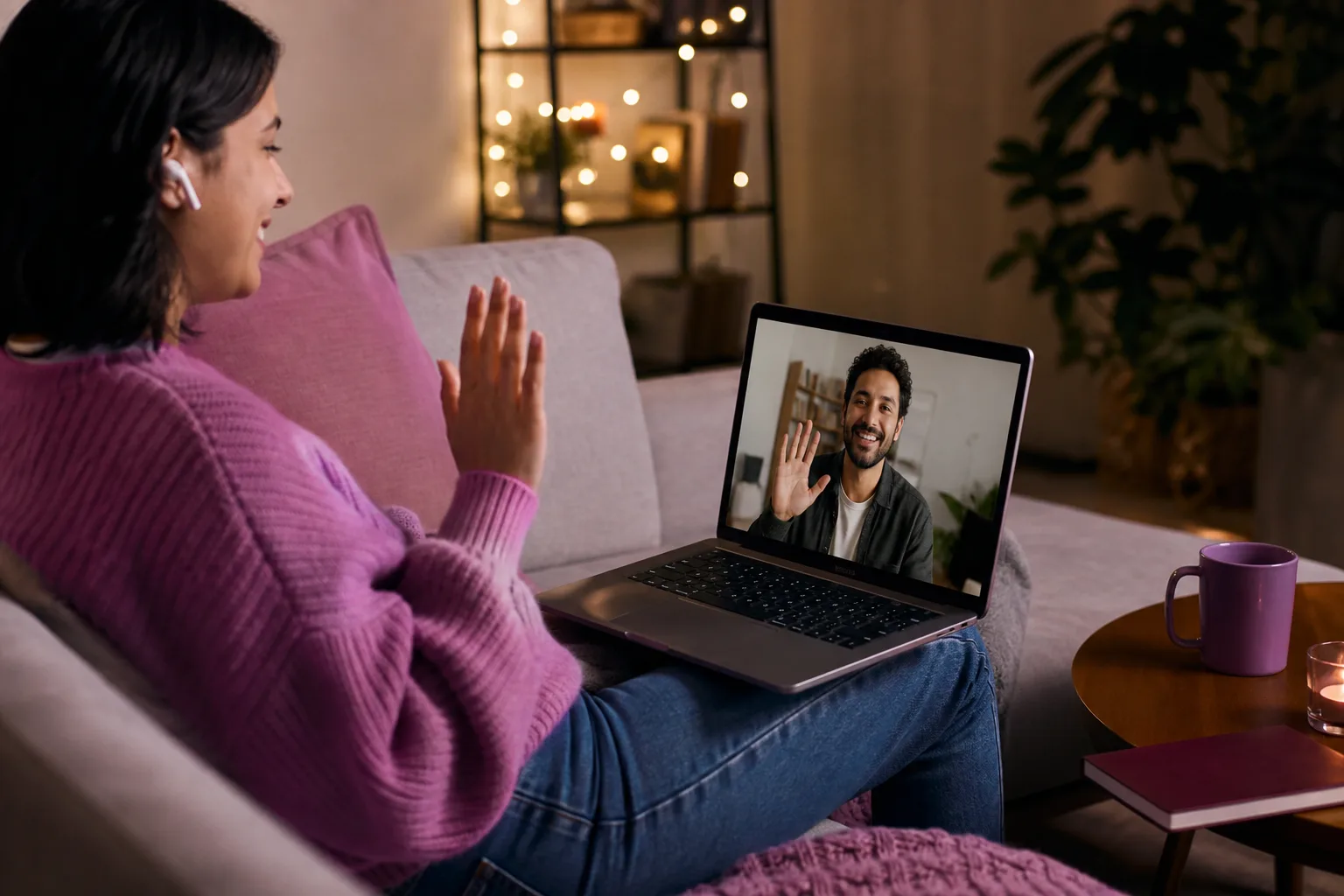
Many people worry about silence more than safety. Usually, the answer is not a list of clever questions. It is having two or three subjects that invite a real answer rather than an interview-style yes or no.
What can you talk about on a first video date?
Start with everyday local life, follow interesting details and share your own answers rather than firing questions across the screen.
You might ask what a normal weekend looks like, which part of the islands they know best, or whether their work keeps regular hours. In Lewis and Harris, the Uists, Benbecula and Barra, practical details matter. Someone may enjoy the same things as you while living far enough away that meeting requires planning around ferries, causeways, shifts or family commitments.
- Begin with the present. Ask how their week has been or what made them choose that particular evening for a call.
- Use local prompts. Talk about favourite walks, cafés, music, community events or the realities of winter weather without treating the islands like a visitor attraction.
- Ask about language naturally. If speaking Gaelic matters to you, say so. It is a reasonable part of compatibility, not a novelty or a test.
- Offer something back. When you ask a question, be willing to give your own answer. Conversation needs a return journey.
- Leave heavy subjects room. Previous relationships, religion, family and future plans can matter greatly, but neither person owes a complete life history on the first call.
A small shared activity can help if face-to-face conversation feels intense. Make tea at the same time, compare a favourite photograph that does not reveal a home address, or each choose a song to discuss. Keep it simple. Watching an entire film together often leaves little chance to learn anything about one another.
How can you stay safe on a video date?
Protect identifying details, watch for pressure or inconsistency and end the call immediately if the other person ignores a boundary.
Use a display name you are comfortable sharing. Check what is visible behind you, including reflected screens, family photographs, school uniforms, vehicle registrations and paperwork. Avoid showing the view from a window if it would make a remote home easy to identify.
Be cautious: Do not send money, banking details, identity documents or verification codes, whatever story you are given. Requests involving an emergency, travel fare, parcel fee or investment are common warning signs. Stop contact and use the platform’s report and block tools.
Also be wary of someone who refuses every live call but asks for emotional commitment, intimate images or financial help. A genuine scheduling problem can happen. A repeated pattern of excuses deserves scrutiny. If sexual behaviour appears on screen without your clear agreement, leave the call. You do not need to stay polite.